Chao Xu, Yibin Huang, Xiaogang Xing, Guoqiang Qiu, Antoine Poteau, Haili Wang, Jianyu Hu, Fei Chai, Bangqin Huang
Limnology and Oceanography
https://doi.org/10.1002/lno.70440
Published: 02 July 2026
Abstract
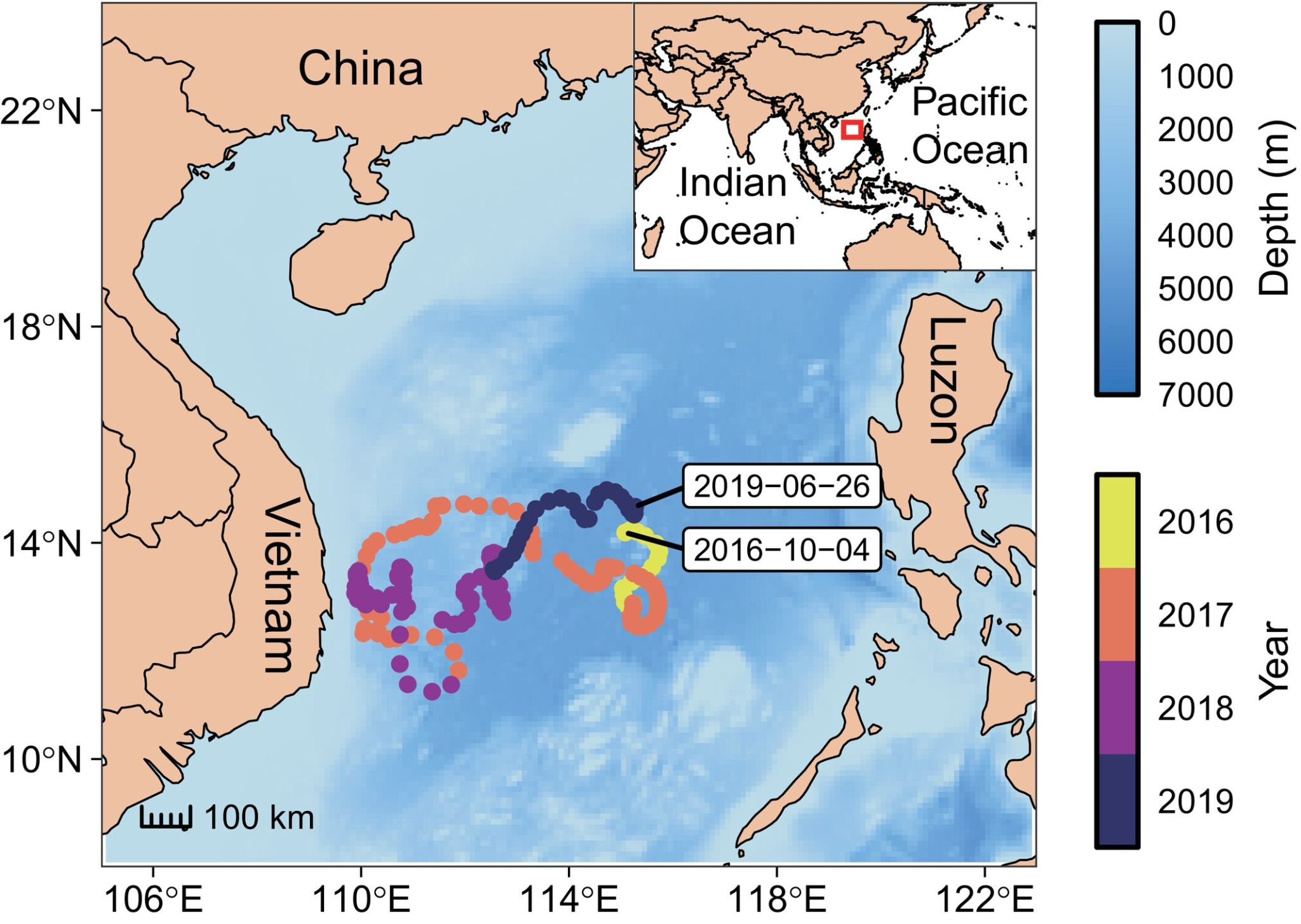
Deep-sea particulate organic carbon (POC) flux sustains deep-sea ecosystems and contributes significantly to long-term carbon sequestration. However, our understanding of its magnitude and governing mechanisms remains poorly constrained due to the limitations of traditional observational approaches. Using a biogeochemical profiling float equipped with a transmissometer, we present nearly 3 yr of high-frequency observations of POC flux at 1000 m depth in the western Pacific marginal sea and examine its responses to upper-ocean physical dynamics. The annual mean POC flux is 0.2 ± 0.1 mol C m−2 yr−1, representing approximately 6% of carbon exported from the euphotic zone. A pronounced seasonal increase in deep POC flux occurs from July to September each year, driven primarily by upwelling-enhanced biological productivity within seasonal cyclonic eddies. Variability in deep flux is largely governed by large particles, which exhibit shorter lags relative to surface carbon export (15 ± 4 d) compared with small particles (54 ± 6 d). The float also captures a coastal jet event that markedly enhances deep POC flux, highlighting the importance of cross-shelf transport from continental margins in regulating deep carbon supply. Together, these results reveal the highly dynamic, process-driven nature of deep carbon flux in low-latitude marginal seas, and further demonstrate the potential of biogeochemical floats to resolve upper–deep ocean coupling and improve constraints on regional carbon budgets.