Shiyao Chena, Hui Wua, Wenhong Xua, Fenfang Wang, Ruifeng Yane, Shaobin Lia, Nengwang Chen
Geoderma
https://doi.org/10.1016/j.geoderma.2026.117780
Published:17 March 2026
Abstract
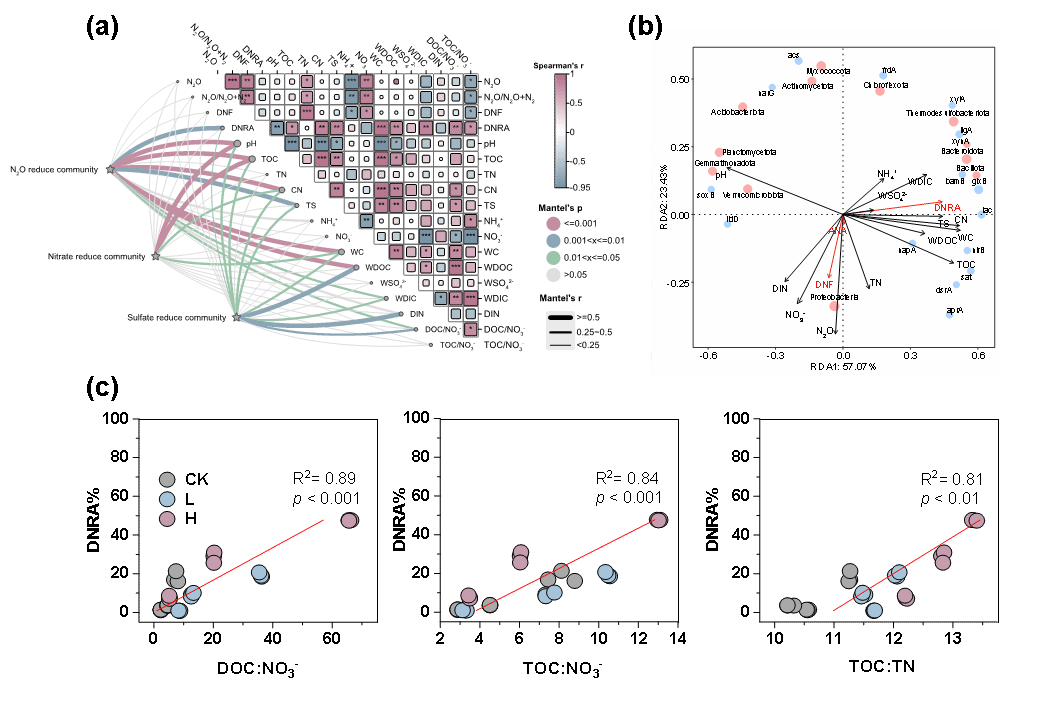
Estuarine mangrove wetlands mitigate coastal eutrophication by removing nitrate (NO3−); however, the effects of invasive Spartina alterniflora eradication, a key biogenic carbon source, on NO3− removal pathways and nitrous oxide (N2O) emissions remain poorly understood. Here, we conducted a two-year field observation and laboratory anaerobic sediment incubation amended with plant residues, combined with 15N isotope tracing and metagenomics analyses. Field observation and laboratory incubation experiments revealed that during the initial eradication, the elevated organic carbon from Spartina alterniflora degradation stimulated denitrifying bacteria (e.g., Proteobacteria) and the nirS gene abundance. Consequently, NO3− removal was dominated by denitrification (DNF, 90.26%), while dissimilatory nitrate reduction to ammonium (DNRA) contributed minimally. Meanwhile, the concurrent pH decline from plant residue fermentation inhibited nosZ-mediated reduction, leading to incomplete DNF and a consequent 153.0% rise in N2O emissions above the background level of 12.48 μg m−2 h−1. The DNF contribution and N2O emission increase reached their maximum approximately six months after plant removal. Driven by an elevated C: NO3− ratio from continuous organic carbon accumulation and NO3− consumption over the following two years, DNRA contribution rose from 5.78% to 34.34% alongside a shift of N2O flux to a sink (−14.54 μg m−2 h−1). The accumulation of nrfA gene, sulfate-reducing bacteria, and II type nosZ microorganisms (e.g., Bacteroidetes, Thermodesulfobacteria) in the sediments favored the above conversion. This study elucidates how biogenic carbon addition reconfigures NO3− removal pathways and associated ecosystem functions, providing scientific insights for coordinating ecosystem management restoration with climate change goals.